



Injury prevention in horses
Injury prevention is essential for maintaining long term performance and durability in horses. Training places repeated mechanical load on muscles, tendons and ligaments. This stress is necessary for building strength, but it must be balanced with sufficient recovery.
When the load exceeds what the tissue can tolerate, the risk of overuse injuries increases.
Structured training, progressive loading and proper recovery are therefore critical for reducing injury risk and maintaining tissue resilience.
What's happening in the body during training
During exercise, muscles, tendons and ligaments absorb mechanical stress. Small microscopic strain develops in the tissue as the body adapts to increased load.
The body responds by repairing the stressed tissue and strengthening the structures involved. This adaptation process improves strength and performance over time.
However, when recovery is insufficient or training intensity increases too quickly, the repair process cannot keep up with the mechanical load.
This imbalance increases the risk of inflammation, tissue fatigue and overuse injuries.

Common causes of training related injuries
Many equine injuries develop gradually rather than suddenly. Repetitive strain and accumulated load can slowly weaken tissue structures.
Common contributing factors include:
- Rapid increases in training intensity
- Repetitive movements without variation
- Insufficient recovery between sessions
- Previous injuries
Monitoring training load and recovery is essential to maintain tissue health over time.
Training strategies to reduce injury risk
Tissues need time to adapt. Gradual increases in workload allow muscles, tendons and ligaments to strengthen safely.
Sudden increases in training intensity significantly increase the risk of injury.
Repetitive strain is a common cause of injury. Varying exercises, surfaces and training intensity helps distribute mechanical load across different structures.
A structured warm up increases circulation and prepares muscles and tendons for mechanical load. It also allows riders and trainers to detect early stiffness or asymmetry.
Cooling down supports circulation and helps remove metabolic byproducts produced during exercise.
Proper recovery between training sessions is essential for maintaining tissue durability.

How red and infrared LED treatment supports recovery
Red and infrared LED treatment significantly stimulates biological processes involved in recovery, inflammation regulation and tissue maintenance.
Scientific studies show that red and infrared light within the optical window influence cellular energy production, circulation and inflammatory responses following exercise.
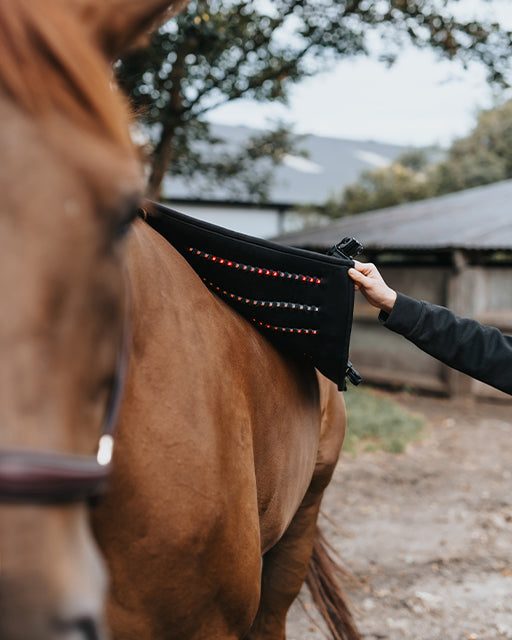
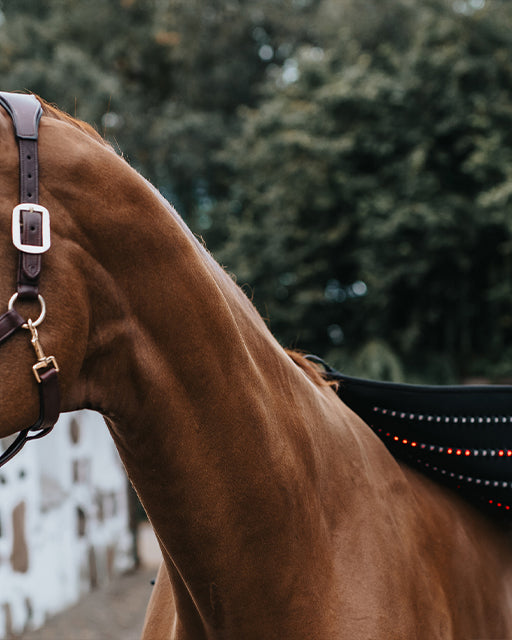
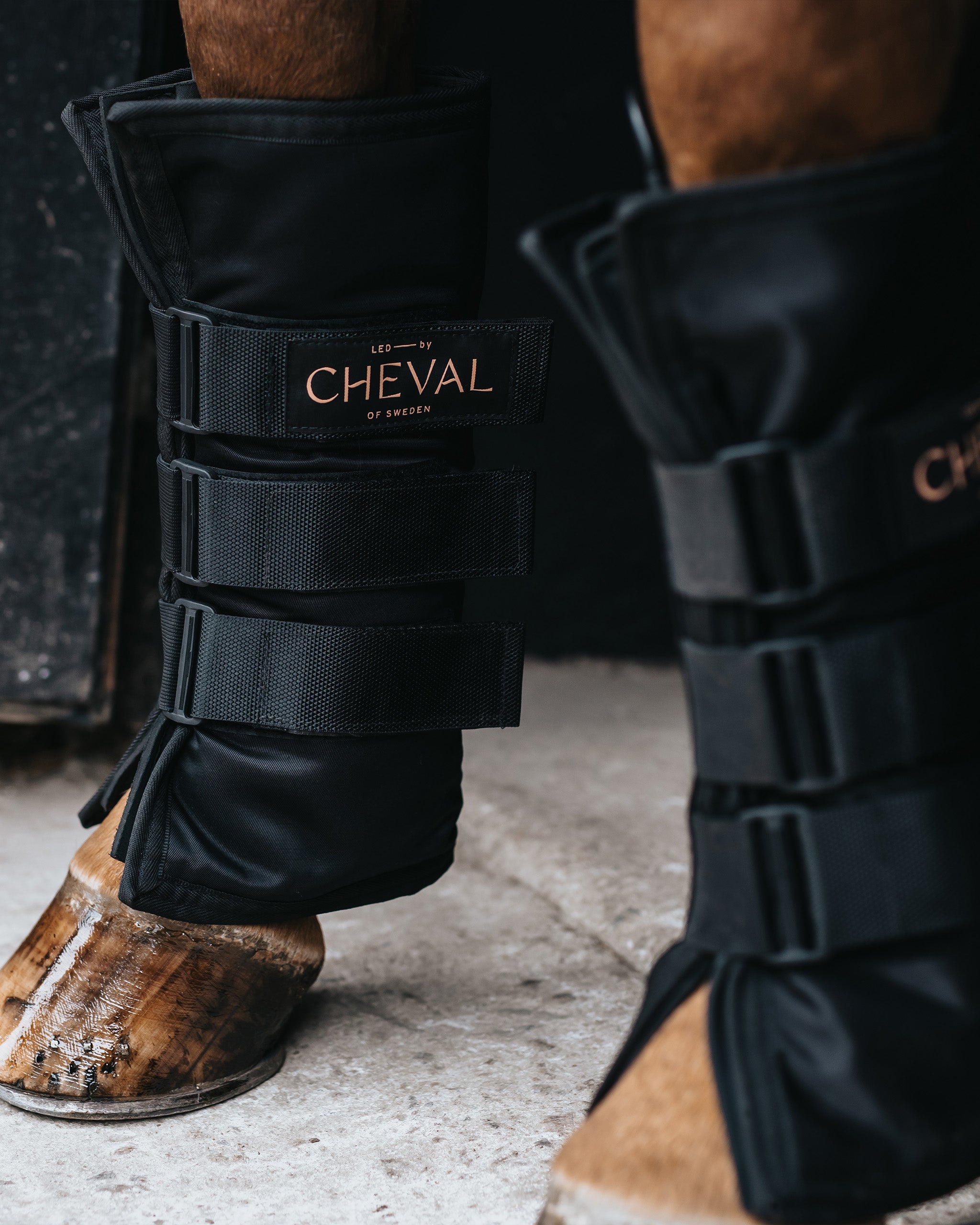
Our LED by CHEVAL treatment systems use exclusively red and infrared wavelengths (no blue light is used). These wavelengths penetrate deeper into biological tissue.
Documented biological effects of infrared LED Treatment in recovery and tissue durability
- Cellular energy production
- Regulation of inflammatory signaling
- Local circulation
- Collagen production in supporting tissues
- Recovery after mechanical load
By supporting these biological processes, LED Treatment helps maintain tissue quality and resilience under repeated training load.
LED Treatment does not replace proper training management or veterinary care. It is a powerful complement for supporting recovery and managing accumulated strain.
Using LED treatment in training routines
LED treatment can be used both before and after exercise.
Using the system before training helps prepare tissue for mechanical load. After exercise, it supports circulation and recovery processes.
Typical sessions are five to ten minutes per treatment area.
Consistent use can support long term tissue durability in performance horses.

Recommended LED treatment systems for injury prevention in horses
Explore treatment systems designed to support recovery, tissue resilience and long term performance.
Each system uses four selected wavelengths of red and infrared light (660/670, 730, 810 and 850 nm). Available for purchase or rental.


Frequently asked questions
Response time varies depending on the condition of the tissue and how consistently the system is used. In training and recovery routines, many owners notice improved mobility and reduced stiffness already after first session.
LED treatment stimulates cellular processes involved in circulation, inflammation regulation and tissue support. When integrated into daily care or structured rehabilitation programs, it helps create better conditions for recovery and long term tissue durability.
If you would like guidance on how to integrate the system into your horse’s routine, we are happy to assist.
Blue light primarily affects the superficial surface of the skin and does not penetrate deeply enough to influence tendons, ligaments or joint structures.
Our systems use exclusively red and infrared wavelengths within the optical window. These wavelengths penetrate deeper into biological tissue and are the most studied for supporting cellular energy production, collagen synthesis and circulation.
We focus only on the wavelengths that are relevant for deeper tissue support.
Yes. LED treatment is non invasive and designed for consistent use.
Many owners integrate the systems into daily care routines, rehabilitation programs and performance management strategies. Regular use helps support circulation, tissue recovery and overall mobility.
No system can guarantee prevention. Injuries occur when mechanical load exceeds the tissue’s capacity.
However, maintaining tissue quality, supporting circulation and regulating inflammatory responses are important factors for long term durability. Many owners use LED treatment proactively to support recovery between training sessions and manage accumulated strain.
We design our treatment systems around biological relevance and real stable conditions.
Each system uses four carefully selected red and infrared wavelengths within the optical window. Every second row emits infrared light to ensure deeper tissue reach. No blue light and no unnecessary wavelengths. Only wavelengths selected for their documented relevance in tissue repair and recovery.
Our systems are engineered for demanding stable environments. They are built to withstand dust, moisture and impact. Even if dropped in dirty stable water or stepped on by a horse, they are designed to continue functioning.
This combination of targeted wavelengths and durable construction sets our systems apart.
Start by renting.
Use the system in your own stable and evaluate the response on your horse. If you decide to purchase, rental payments can be credited toward your system.
Low risk. Professional level technology.