



The best treatment system for your horse
Choosing the right treatment system for your horse is essential for effective treatment and long term durability. Not all systems deliver the same performance. Several technical parameters determine how well a system supports circulation, tissue repair and recovery.
This guide explains the most important factors to consider when comparing treatment systems.
Output power and number of LEDs
One of the most important factors when comparing treatment systems is the total output power delivered to the treatment area.
Output power determines how much light energy reaches the tissue during treatment. It is typically measured in milliwatts (mW). Higher total output allows the system to deliver an effective dose of light energy within a reasonable treatment time.
However, output power alone does not determine performance.
The number of LEDs and how the light is distributed across the treatment area are equally important. Systems with many LEDs spread the energy more evenly across the tissue instead of concentrating it in a few points.
This allows larger areas to be treated efficiently while maintaining a consistent dose of light.
Wavelengths
Most therapeutic light systems operate within the optical window, approximately 600 to 900 nanometers. Within this range, light penetrates tissue effectively and interacts with cellular processes involved in repair, circulation and energy production.
This range is widely used in photobiomodulation research because biological tissue allows these wavelengths to penetrate while still interacting with cellular light absorbing molecules.
Blue light lies outside this range.
Wavelengths in the lower part of the optical window mainly influence more superficial tissue layers, while wavelengths in the higher part reach deeper structures such as muscles, tendons and joints.
High quality treatment systems combine carefully selected wavelengths within the optical window to support both surface tissue and deeper structures.
System design and durability
System design determines how easily the system can be positioned on different parts of the horse and how well it performs in daily use.
Some systems are designed for specific anatomical areas, while others allow flexible placement across multiple treatment zones. A well designed system should remain stable during treatment and allow precise positioning on the target area.
Treatment systems used in stable environments must also be robust. Dust, moisture and mechanical impact are unavoidable in daily equine use. The system should therefore be constructed from durable materials that can withstand demanding conditions.
Ease of cleaning and safe operation are also important considerations.
Warranty and purchasing options
Warranty coverage reflects the manufacturer’s confidence in the durability of the product. A system designed for equestrian use should include clear warranty coverage that protects the investment over time.
When comparing systems, it is also important to consider the overall cost structure. Price, shipping costs, payment options and delivery times may vary between suppliers.
A reliable manufacturer should also be available to provide guidance when selecting the most suitable system for your horse.
How LED by CHEVAL systems compare
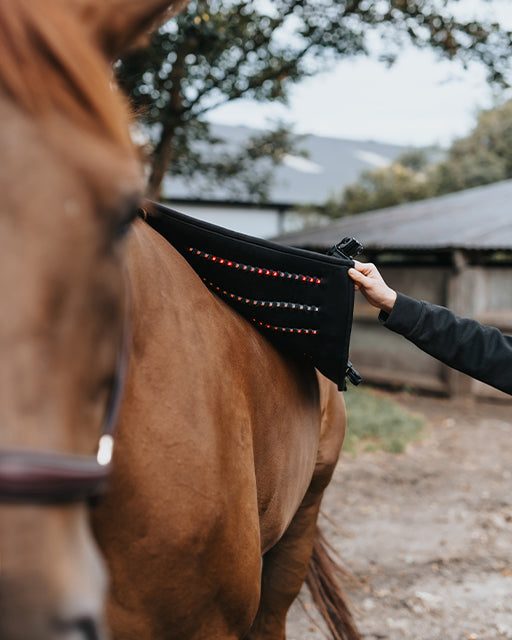
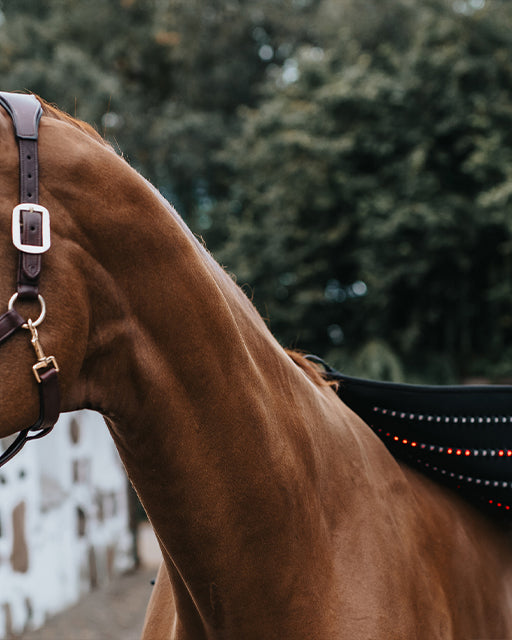
LED by CHEVAL systems are designed to deliver a high and consistent light output across the entire treatment area.
Instead of concentrating energy in a few points, the light is distributed across many LEDs. This allows the system to deliver an effective dose of light energy while maintaining safe and controlled treatment conditions.
A higher number of LEDs also allows larger areas to be treated efficiently while keeping treatment sessions short.
LED by CHEVAL systems use carefully selected wavelengths within the optical window, the range most widely used in photobiomodulation research.
Each system combines four wavelengths of red and infrared light:
660 / 670 nm, 730 nm, 810 nm and 850 nm.
Wavelengths in the lower part of this range influence more superficial tissue layers, while longer wavelengths reach deeper structures such as muscles, tendons and joints.
Every second row in the system emits infrared light to ensure deeper tissue penetration.
No blue light is used, as blue wavelengths can only affect the superficial surface of the skin.
LED by CHEVAL systems allow flexible positioning on multiple parts of the horse.
We developed the systems specifically for equine use. The flexible construction adapts to different parts of the horse’s body while maintaining stable positioning during treatment.
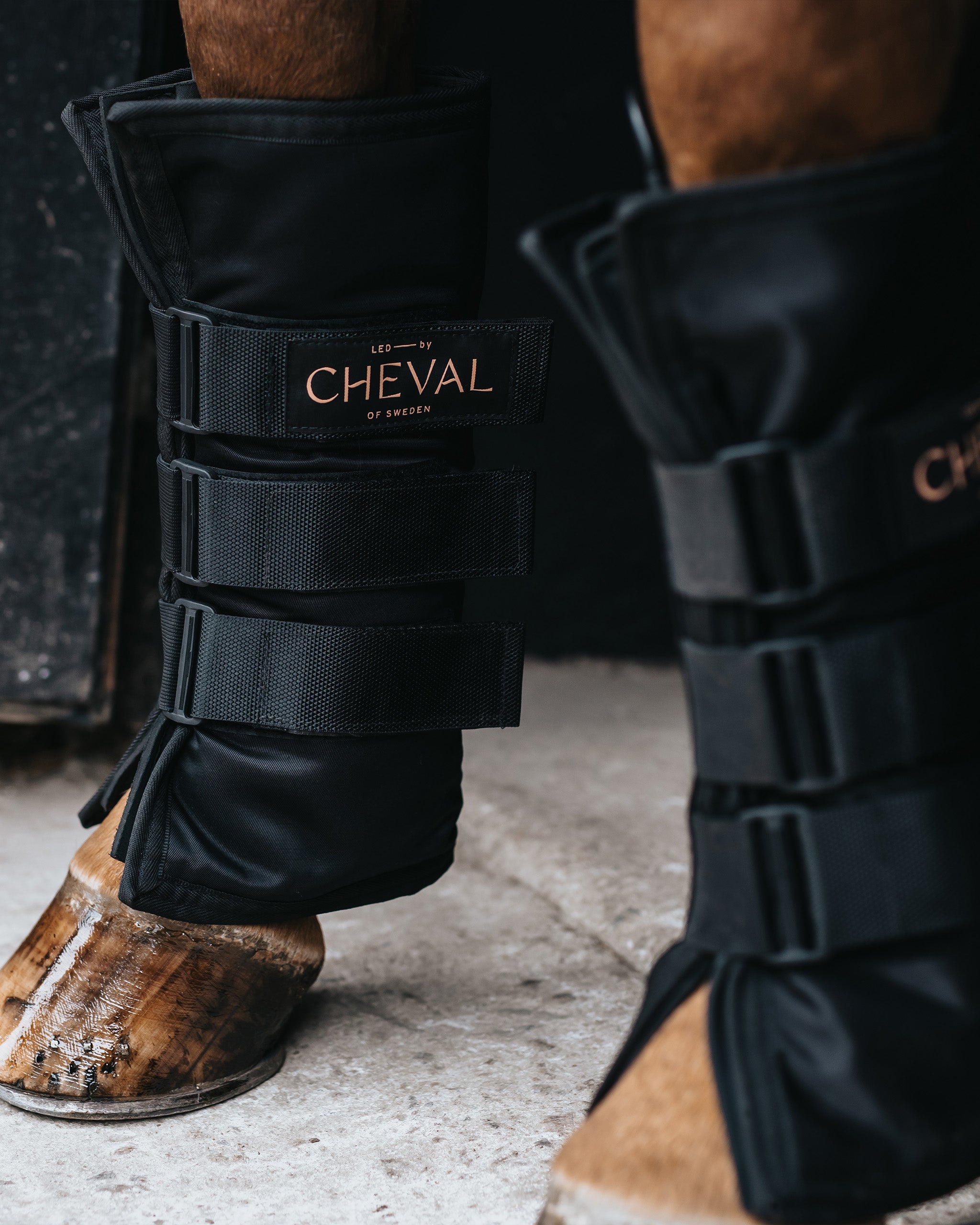
Each system includes adjustable Velcro straps that allow precise placement on different areas. The modular design also allows multiple systems to be connected and positioned together. This makes it possible to treat larger muscle groups or extended areas such as the topline with consistent light coverage.
Stable environments can be demanding. Dust, moisture and mechanical impact are part of daily equine use. The systems are built to withstand these conditions and remain easy to clean.
Even if dropped in dirty stable water or stepped on by a horse, they are designed to continue functioning.
LED by CHEVAL systems are developed for long term use in equine environments and include clear warranty coverage.
The warranty reflects the durability of the materials and components used in the systems.
Systems can be purchased directly or rented. Rental allows horse owners and professionals to evaluate the system in their own stable before deciding to invest.
Rental payments can later be credited toward a purchase, providing a flexible way to access professional LED treatment technology.
Find the right treatment system for your horse
Explore the LED by CHEVAL treatment systems designed for performance, recovery and daily care.