



Joint inflammation in horses
Joint inflammation in horses is a common cause of discomfort, stiffness and reduced performance. It can affect both sport and leisure horses and may develop after mechanical overload, repetitive strain or previous injury.
When inflammation develops inside the joint, mobility can decrease and movement may become less fluid. Early and structured joint management is important to support function and long term durability.
Understanding joint inflammation in horses
A healthy joint moves smoothly and under control. Cartilage protects the bone surfaces, while synovial fluid provides lubrication and shock absorption.
When inflammation develops inside the joint, this balance changes. Repetitive strain, mechanical stress or previous injury can trigger inflammatory activity. Over time, cartilage may gradually break down, the joint capsule can thicken and lubrication may decrease. As this occurs, friction during movement increases.
Joint inflammation in horses often develops when mechanical load exceeds what the tissues can tolerate over time.

Common symptoms of joint inflammation in horses
Joint inflammation often develops gradually. Early signs can be subtle and easy to overlook.
- Stiffness, especially at the beginning of exercise
- Reduced willingness to bend or work in collection
- Shortened stride length
- Mild or intermittent lameness
- Swelling around the affected joint
- Reduced performance or reluctance under load
In more advanced stages, stiffness becomes more consistent and lameness more apparent.
Even small changes in movement, joint contour or symmetry should be monitored carefully. Early evaluation improves the conditions for structured and successful management.
The progressive nature of joint inflammation
Joint inflammation in horses may develop gradually and can progress over time if the underlying load or irritation continues.
Inflammatory activity increases inside the joint. Mild stiffness and subtle performance changes may appear. Cartilage may still look normal, but inflammation begins to affect joint function.
If inflammation persists, cartilage quality may gradually decrease. Lubrication can be reduced and friction inside the joint may increase. Movement may feel less fluid and stiffness becomes more noticeable.
Long standing joint inflammation can, in some cases, contribute to degenerative joint disease. Cartilage may become thinner, the joint capsule can thicken and joint mobility may become more limited. This stage influences long term comfort and performance capacity.

Supporting the management of joint inflammation in horses
Red and infrared LED treatment significantly stimulates important cellular processes involved in inflammation regulation and tissue repair. Scientific studies show measurable effects relevant to joint health.
Documented biological effects of red and infrared LED treatment in joints
- Regulation of inflammatory signaling
- Local circulation
- Cellular energy production
- Collagen synthesis in supporting tissues
- The transition from inflammation toward stabilization
By supporting these processes, LED treatment helps create better conditions for joint comfort and structured management.
LED treatment does not replace veterinary care. It is an effective complement that improves the biological conditions for long term joint support.

Recommended treatment systems for joint inflammation in horses
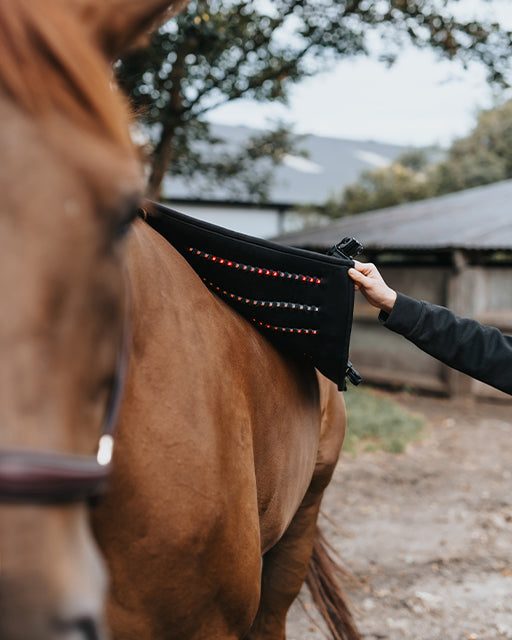
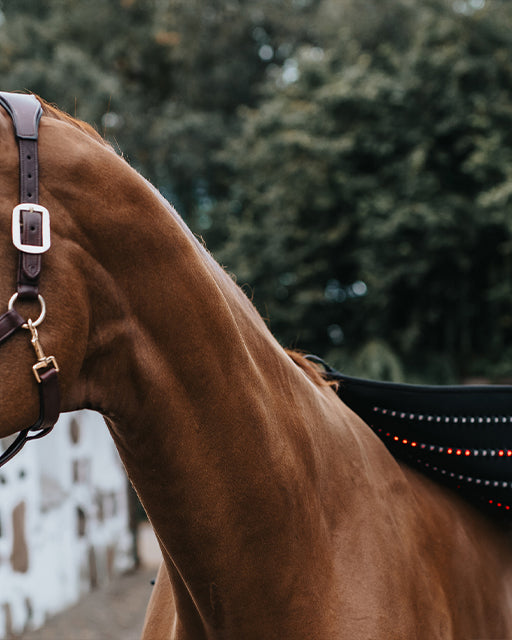
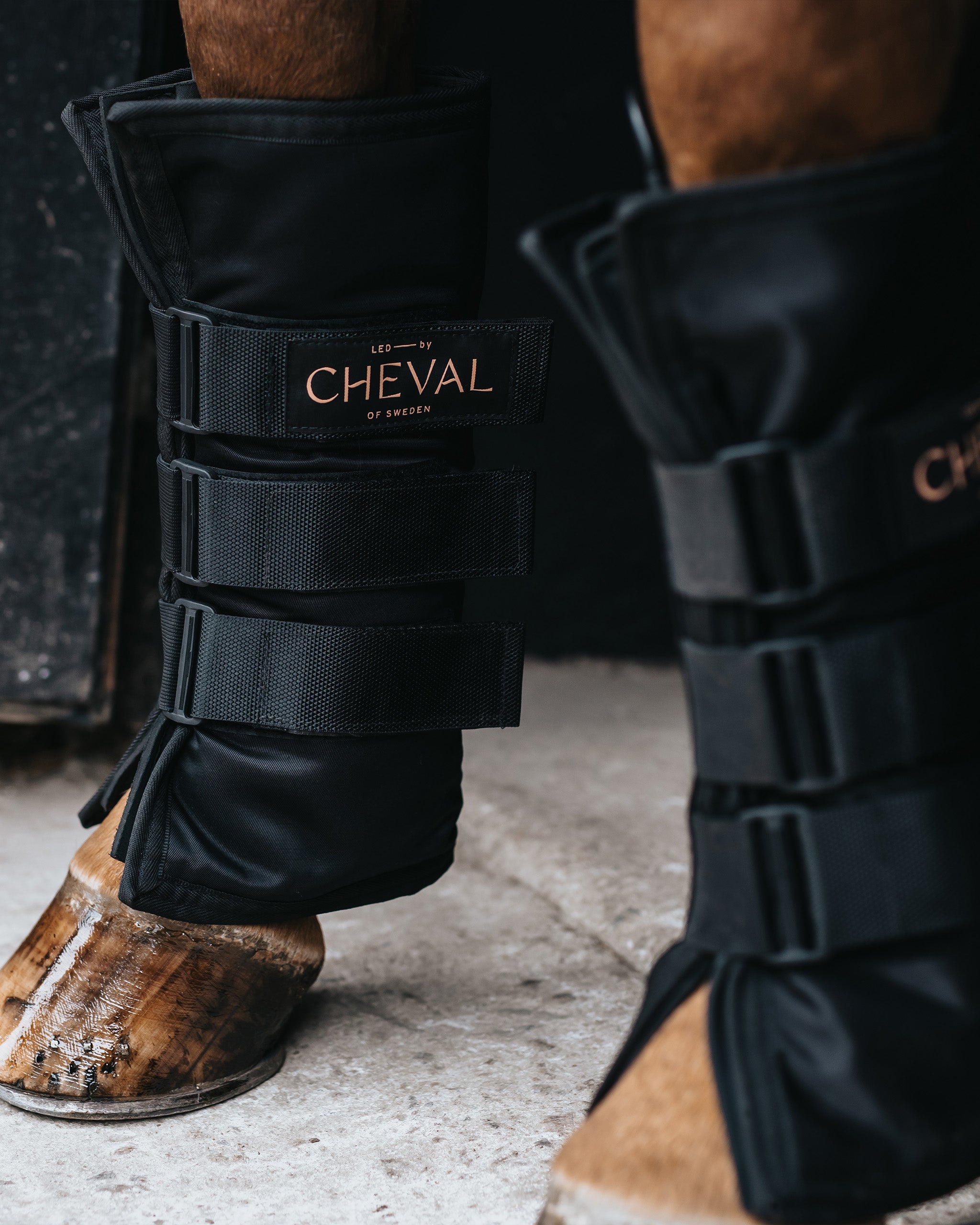
Each system uses four selected wavelengths of red and infrared light (660/670, 730, 810 and 850 nm) to support joint mobility, tissue function and long term joint health. Suitable for commonly affected areas such as fetlocks, hocks, knees, stifles and pastern joints. Available for purchase or rental.


Frequently asked questions
Many horses show improved mobility and greater comfort with consistent use. The response depends on the severity of the joint inflammation and overall workload.
LED treatment supports inflammation regulation and joint function, helping create better conditions for smoother movement and ease under load. For ongoing joint stress, consistent use is key.
If you would like guidance on integrating the system into your horse’s management plan, we are happy to assist alongside your veterinarian’s recommendations.
Blue light primarily affects the surface of the skin and does not penetrate to the depth where joints, tendons and supporting structures are located.
Our systems use exclusively red and infrared wavelengths within the optical window. These wavelengths penetrate further into biological tissue to support cellular energy production, collagen synthesis and circulation.
Yes. LED treatment is non invasive and designed for consistent use. Many professionals integrate it into daily care, performance management and rehabilitation programs.
No system can guarantee prevention. Joint inflammation develops when mechanical load and recovery fall out of balance.
However, supporting circulation, regulating inflammatory activity and maintaining joint function are important factors in long term joint health.
When integrated into regular training and management routines, LED treatment can help support joint mobility and reduce the risk of inflammation over time.
We build our treatment systems around biological relevance and real stable conditions.
Each system uses four carefully selected red and infrared wavelengths within the optical window. Every second row emits infrared light to ensure deeper tissue reach. No blue light. No unnecessary wavelengths. Only wavelengths selected for its documented relevance in tissue repair.
But technology alone is not enough.
Our systems are engineered for daily use in demanding stable environments. They are built to withstand dust, moisture and impact. If dropped in dirty stable water or stepped on by a horse, they are designed to continue functioning.
This combination of targeted wavelengths and durable construction sets our systems apart. You get advanced light technology in a format built for real world equine use.
Start by renting. Use the system in your own stable and evaluate the response. If you decide to purchase, rental payments can be credited toward your system.
Low risk. Professional level technology.